


Why E‑Bike Safety Matters Right Now
E‑bikes are transforming how we get around—making everyday travel more affordable, empowering young people with greater independence, and reducing emissions—while their growing popularity makes safe riding more important than ever.
U.S. e‑bike sales increased from approximately 250,000 in 2019 to over 1 million in 2022.
Only 12% of e‑bikes observed at schools meet legal definitions; 88% are higher-speed devices.
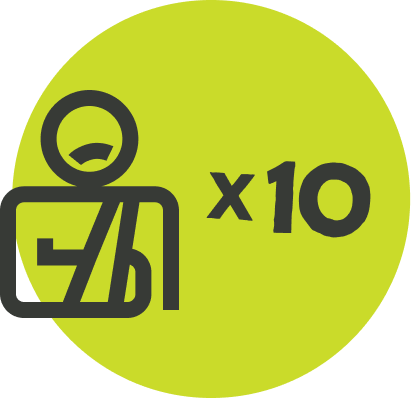
Legal e‑bike and higher-speed electric device-related ER injuries increased 10 times from 2020 to 2024.
New to E‑Bikes?
We’ve got you covered.
Learn from the experts
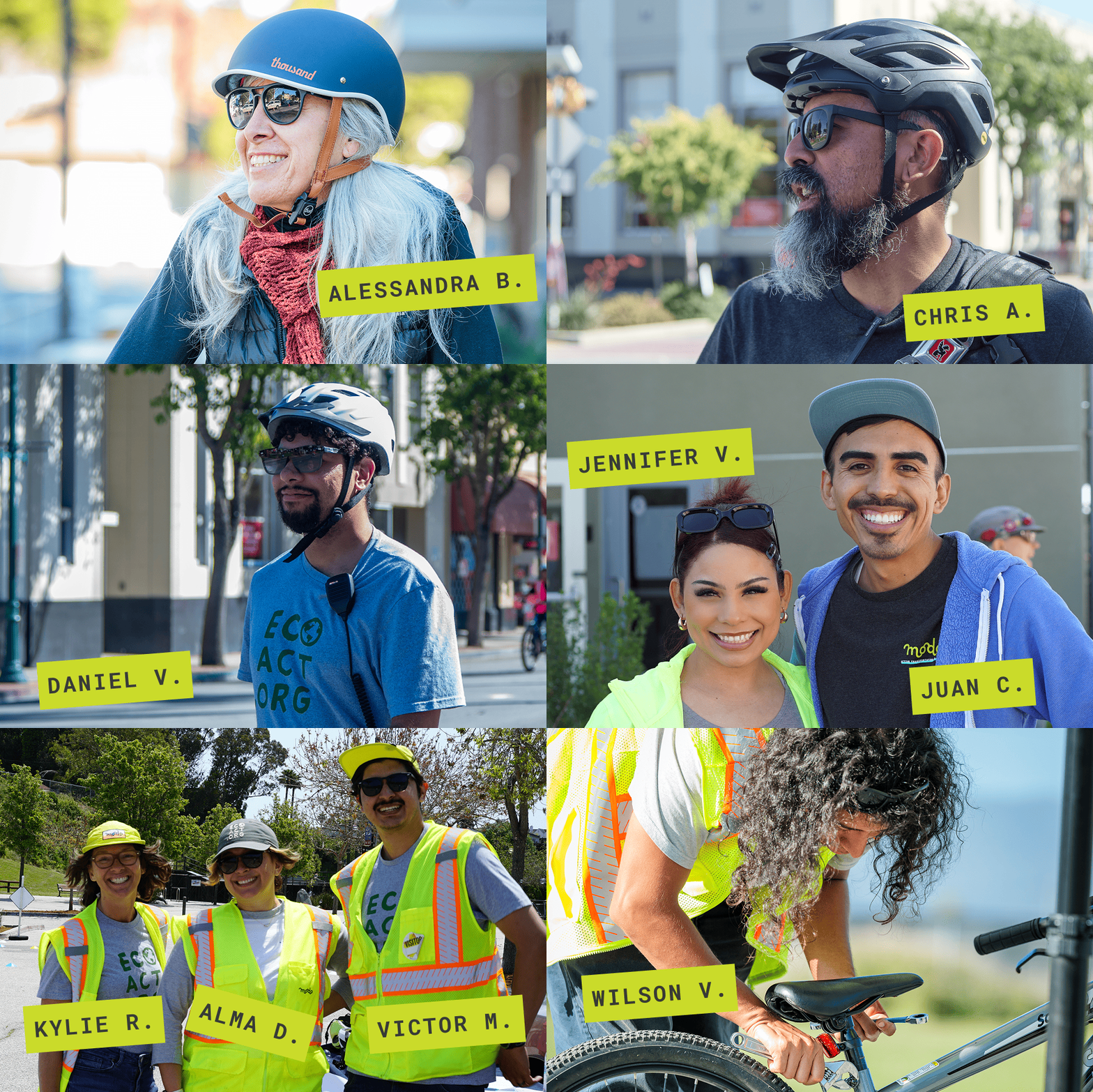
Collectively, our team has tested dozens of e-bikes, ridden thousands of miles and delivered hundreds of educational experiences, including on-bike trainings, group rides, classroom presentations and community workshops. We’ve done our homework on e-bike policy, the most common e-bike missteps and the best strategies for riding safely. We are committed to helping all members of our communities safely share the road.
What is an E-bike?
E‑bikes look like traditional bicycles but include a small electric motor that assists as you pedal. This motor makes it easier to ride uphill, carry cargo, or travel longer distances, with top assisted speeds typically ranging from 20–28 mph depending on the class.
E-bike Classes (California Basics)
Legal e-bikes do not require a license and must follow traffic laws like any bicycle.If a vehicle falls outside the Class 1-3 e-bike definitions (e.g., exceeds speed limits, power limits, or lacks operable pedals), it is no longer considered an e-bike and is regulated differently.
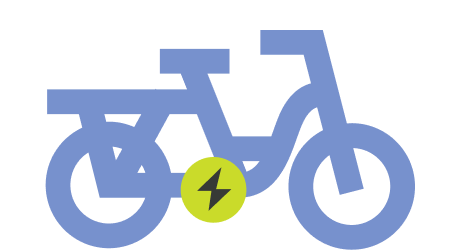
Class 1
Top speed: 20 MPH
Pedal-Assist: Yes
Throttle: No
Age Limit: No

Helmets required for children 16 and under
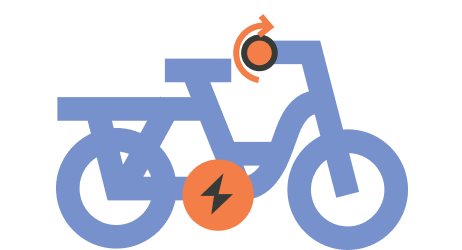
Class 2
Top speed: 20 MPH
Pedal-Assist: Yes
Throttle: Yes
Age Limit: No
Helmets required for children 16 and under
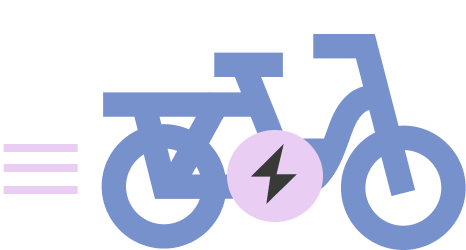
Class 3
Top speed: 28 MPH
Pedal-Assist: Yes
Throttle: No
Age Limit: 16+

Helmets required for all ages
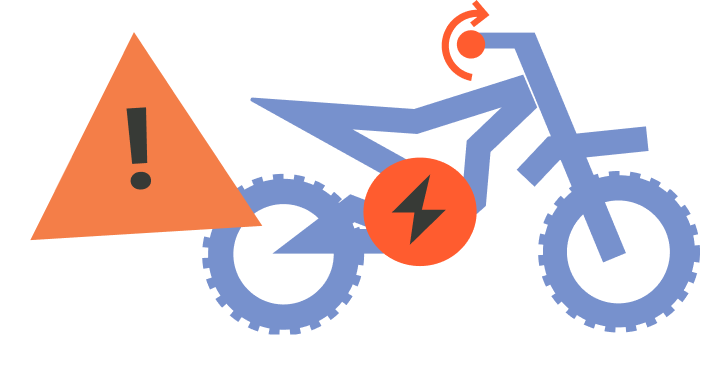
E-Moto
Not an e-bike
Top speed: 60+ MPH
Pedal-Assist: No
Throttle: Yes
An e-bike with a motor over 750 watts, or one capable of exceeding 20 mph using only the throttle, is considered an electric motorcycle (e-moto). E-motos are not street legal without licensing, insurance, and registration.
E-bike Safety Guidance
Explore the rotator below for introductory safety tips.

Start with the Right Bike, Not the Fastest Bike
Choose an e-bike that matches the rider’s experience level. For new riders, a lower-speed Class 1 e-bike may provide a safer introduction than higher-speed models.
Why: Lower-speed, pedal-assist bikes give newer riders more time to react, brake, and build judgment and skill before managing higher speeds.

Focus on skill building Before Speed
Practice starting, stopping, turning, and riding with pedal assist in a low-traffic area before riding on busy streets or paths.
Why: Practicing basic handling and braking first helps riders develop control before they face traffic, pedestrians, or unexpected obstacles.

take care with passengers
Do not carry people on racks, pegs, or other areas unless the bike is specifically designed and equipped for passengers.
Why: Extra riders can change the bike’s balance, increase stopping distance, and raise the risk of falls or loss of control.

maintain focus and limit Distraction
Keep both hands on the handlebars and put phones away while riding. Audio or earbuds shouldn’t prevent you from hearing traffic and other road users.
Why: Distraction limits a rider’s ability to see, hear, and respond quickly to vehicles, pedestrians, and changing road conditions.
For more information, download our e-bike safety guide.
Download guideE‑Bike Safety Education and Training
Our team has decades of experience delivering active transportation safety education across Santa Cruz County and beyond. Many of our team members are bilingual in English and Spanish and all of our instructors are League Cycling Instructors (LCIs) certified by the League of American Cyclists.
Our E‑Bike Safety Programs
We partner with schools, cities, and community organizations to deliver tailored active transportation education, engagement solutions.
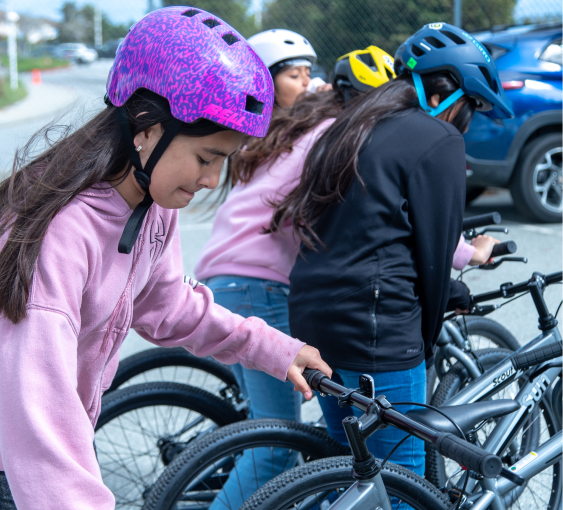
School-Based Education
Our team provides e-bike safety curriculum for middle-, high-school and college students through interactive classroom sessions, on-bike skills workshops and supervised group riding experiences.
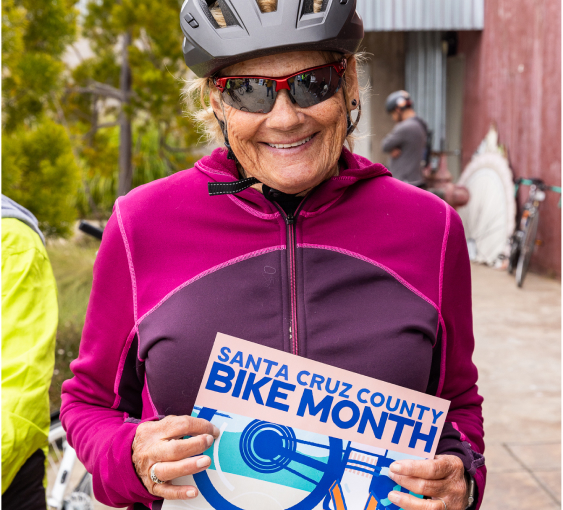
Community Activations
We engage families and community members with on-bike safety trainings, learn-to-ride clinics, e-bike demos, and expert-led group rides.

Equitable Program Design & Partnerships
Our team partners with cities and community partners to co-develop data-driven, equity-centered, bilingual e-bike safety programs designed to support underserved communities.
Local Spotlight: Youth E‑Bike Pilot
We’re partnering with local leaders to address the rapid rise in youth e‑bike ridership through education—not enforcement.

“From a school perspective, the program provides an important layer of prevention by promoting safe transportation habits, reducing risk-taking behaviors, and increasing student awareness of traffic laws and safety expectations.”
Casey O'Brien
Read Santa Cruz Local’s coverage about the pilot program.

Bring e-bike safety to your community
Get started
Want to partner with Modo on e‑bike safety?
Whether you’re a:
- School or district
- Public agency
- Community-based organization
We can build a customized e‑bike safety program for your community. Fill out the form here, selecting e-bike safety from the drop down options and our team will be in touch.